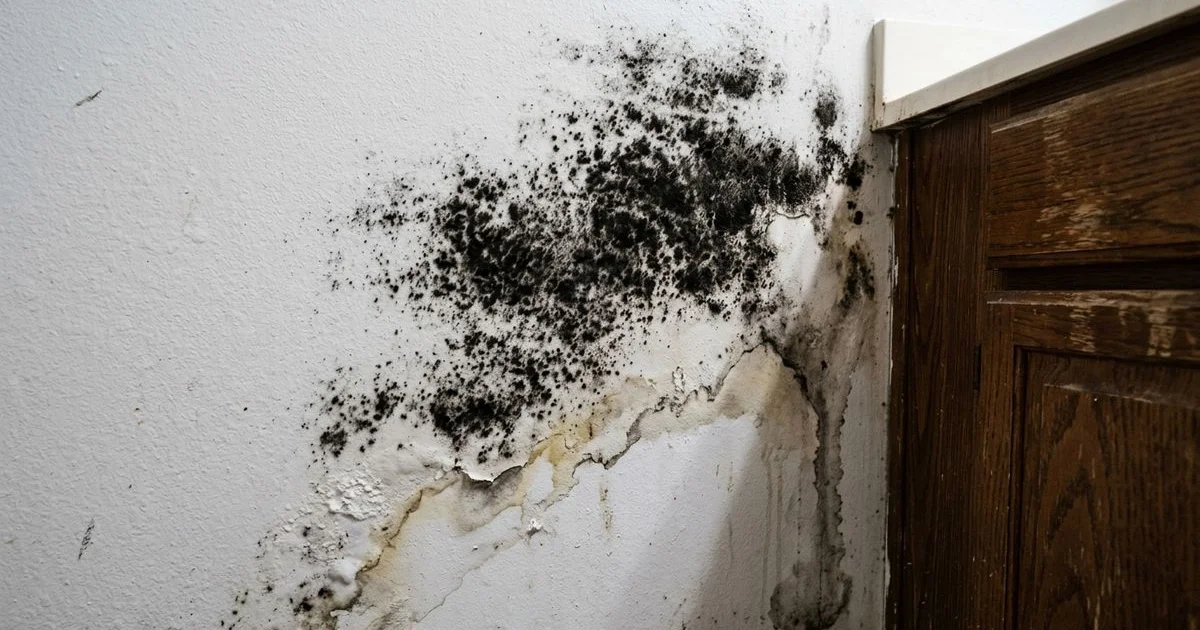
We know exactly what runs through a homeowner’s mind when spotting those dark patches on the drywall. That immediate sinking feeling is usually followed by a frantic search for pricing.
Our mold removal team in Wichita fields these cost-related questions daily, especially after those intense spring rainstorms. Reading through How Much Does Mold Remediation Cost in Wichita? (2026 Guide) gives you the exact breakdown.
We see local spring rainfall hit up to 4.5 inches by late May, followed by intensely muggy summer heat. Those specific climate factors create a perfect breeding ground for rapid fungal growth inside wall cavities.
Our goal is to provide total transparency on what this cleanup actually requires today.
Let’s look at the localized data, what it actually means for your property, and how to respond effectively.
How Much Does Mold Remediation Cost in Wichita? (2026 Guide to Averages)
Our technicians have handled hundreds of mitigation projects across the metro area. National data from real estate authorities like Redfin currently places the average American mitigation project at $2,300 for 2026.
We find that local Sedgwick County prices align closely with this, typically running between $10 and $25 per square foot. The table below outlines typical ranges based on our localized pricing models.
| Severity | Affected Area | Typical Cost Range |
|---|---|---|
| Minor | Under 50 sq ft (small bathroom, closet) | $500 to $1,500 |
| Moderate | 50-200 sq ft (large room, partial basement) | $1,500 to $7,500 |
| Significant | 200-500 sq ft (multiple rooms, full basement) | $7,500 to $15,000 |
| Extensive | 500+ sq ft (whole-house, HVAC contamination) | $15,000 to $30,000+ |
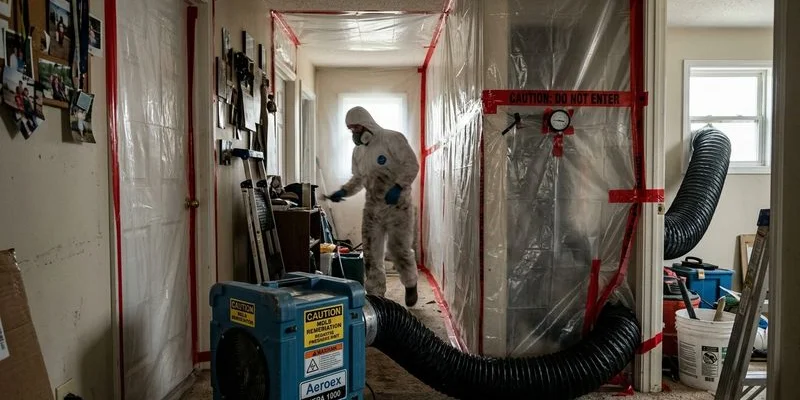
Our quotes always cover strict containment protocols, commercial air filtration, and heavy material removal. Basic surface restoration and targeted antimicrobial treatments are also included in these base figures.
We quote full reconstruction tasks like hanging new drywall or installing fresh flooring separately.
What Factors Affect the Cost?
Detailed estimating procedures reveal why two seemingly identical basements might have drastically different cleanup invoices. Our field teams analyze several distinct variables on every single site.
1. Size of the Affected Area
The square footage of the active contamination zone remains the single biggest multiplier on your invoice. We treat a ten-square-foot patch behind a toilet vastly different than an entire flooded basement.
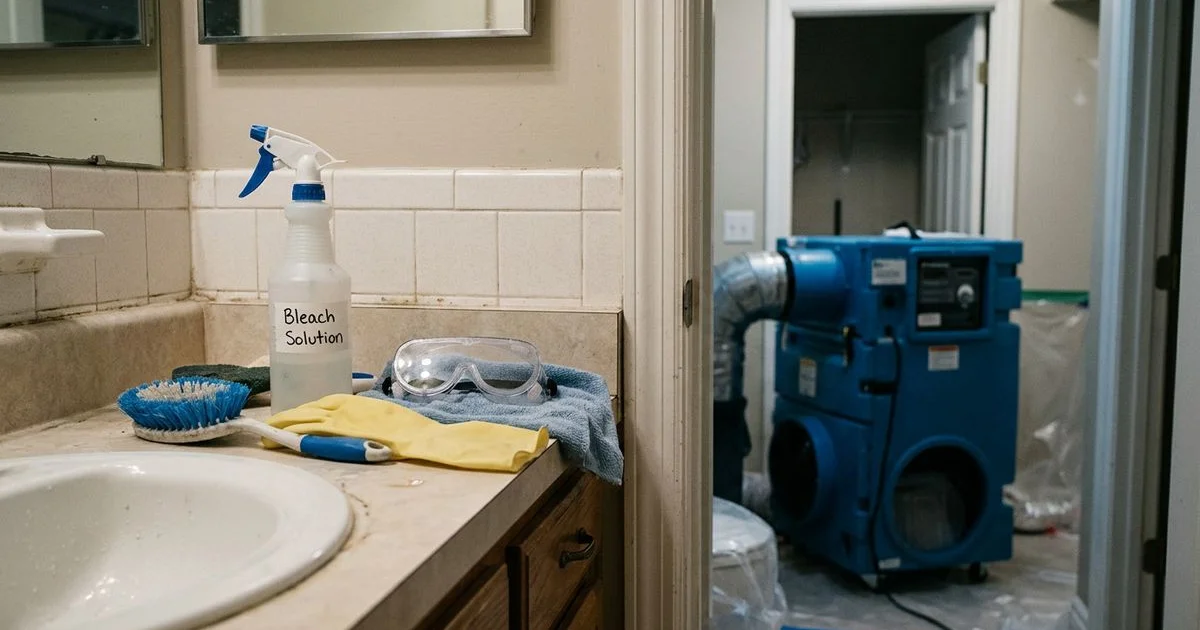
Handling massive outbreaks requires more labor hours and specialized HEPA-filtered negative air machines. Our technicians carefully measure the exact boundaries, including hidden growth spreading behind baseboards.
2. Location and Accessibility
Exposed concrete basement walls are much faster to clean than a cramped attic space. We know that difficult locations require specialized equipment and drastically slow down the removal process.
The most expensive remediation scenarios typically occur in these specific areas:
- Inside HVAC ductwork and central air handling units
- Deep inside insulated ceiling cavities
- Underneath concrete slab foundations
- Tucked behind custom built-in cabinetry
- Trapped inside sealed wall cavities requiring demolition
3. Material Types and Disposal Rules
Our crews must completely remove porous items like saturated drywall, standard fiberglass insulation, and carpet padding. These highly porous materials simply cannot be saved once fungal roots penetrate their cellular structure.
We follow Sedgwick County disposal guidelines, which require contaminated debris to be double-bagged in thick 6-mil polyethylene before heading to facilities like Brooks Landfill. Conversely, non-porous surfaces like glass or treated metal are easily sterilized in place to save money.
4. Water Source and Contamination Category
Our safety protocols scale dramatically based on the type of water that fed the fungal growth. Category 3 black water from a raw sewage backup mandates extreme biohazard precautions and chemical decontamination.
We can utilize standard commercial cleaning methods if the source was a clean Category 1 supply line leak. Heavily contaminated water simply demands more expensive protective gear and intensive chemical applications.
5. Standard Rebuilding Requirements
Our job isn’t finished until the damaged space is fully prepped for normal living again. Replacing a simple two-foot section of trim costs very little in the grand scheme.
We see costs skyrocket when an entire kitchen requires custom cabinetry replacement and fresh tile work. Complete room rebuilds will always form a separate, substantial line item on any final invoice.
Does Insurance Cover Mold Remediation?
Our clients constantly ask if their insurance carrier will pick up the tab. The honest answer strictly depends on the exact origin of the moisture problem.
Typically Covered Scenarios
We regularly secure billing approvals when the damage stems from a sudden, accidental covered peril. Standard Kansas HO-3 homeowner policies usually protect against these abrupt emergencies.
Our administrative department consistently sees carriers approve claims for these specific events:
- A sudden supply line failure or burst pipe
- Catastrophic washing machine overflow
- Storm-driven rain entering through a freshly damaged roof
- Accidental fire suppression water damage
- Immediate HVAC system component failures
Typically Not Covered
Adjusters almost universally deny claims linked to deferred maintenance. We know from experience that carriers view long-term neglect as the property owner’s direct responsibility.
Obtaining coverage is exceedingly rare for the following gradual issues:
- An ongoing roof leak ignored for months
- Chronic high humidity levels without proper dehumidification
- Slow groundwater seepage permeating a foundation
- A hidden plumbing drip allowed to persist
- General structural wear and aging
How We Handle Your Insurance Claims
Our administrative staff coordinates directly with your carrier from the very first phone call. Handling an insurance dispute alone is incredibly stressful for most property owners.
We streamline this procedure by providing the exact photographic documentation adjusters demand. Most Kansas policies feature a specific mold rider that caps testing and cleanup payouts at around $10,000.
Our experts utilize Xactimate software to generate line-item estimates that perfectly match the carrier’s exact pricing structure. This precise digital formatting eliminates frustrating pricing arguments and speeds up your final approval.
How to Get an Accurate Estimate
We strictly refuse to provide blind quotes over the phone. Online cost calculators simply cannot account for moisture trapped deep inside your framing.
Our teams strictly adhere to the ANSI/IICRC S520 guidelines, which serve as the definitive professional standard for safe mold remediation. A legitimate evaluation requires specific diagnostic tools and a physical walkthrough.
We ensure our comprehensive site inspections always include:
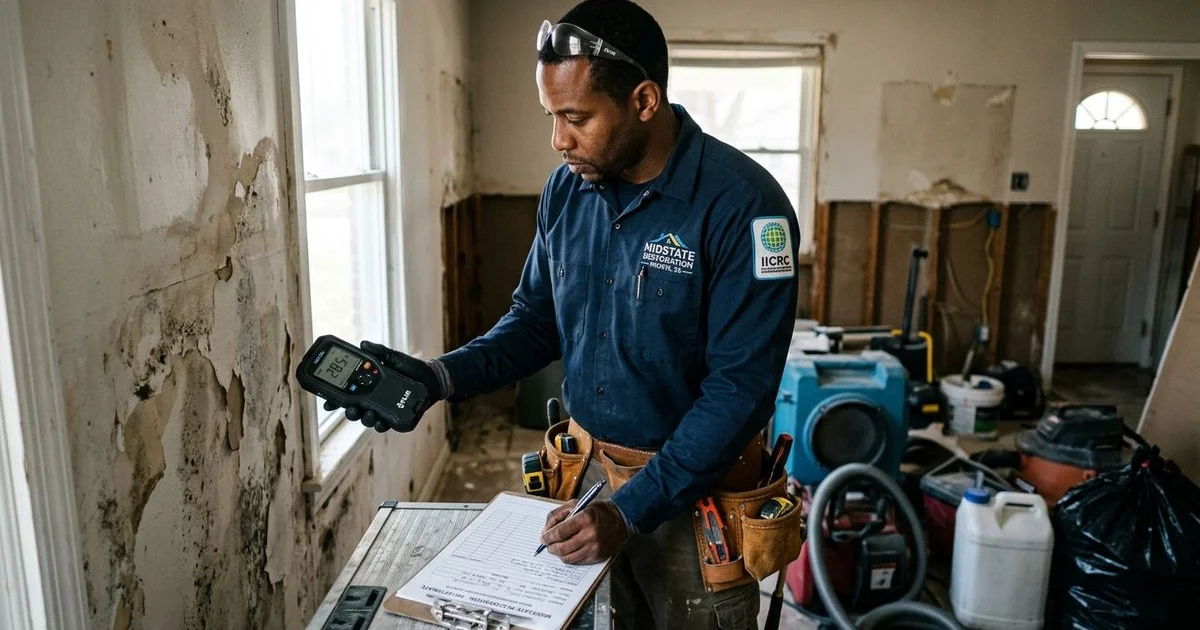
- Targeted moisture meter readings to map hidden dampness
- Thermal infrared camera surveys to reveal trapped water behind walls
- Professional air quality sampling to calculate airborne spore concentrations
- A written, line-item scope of work detailing every necessary step
- Clear identification of the root moisture source
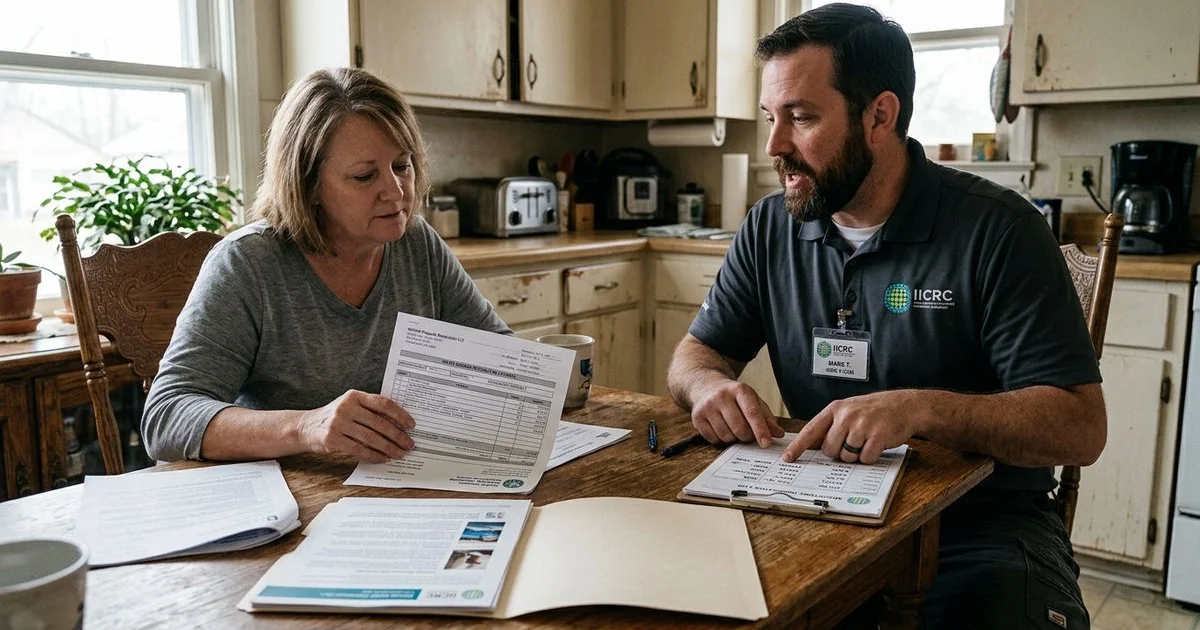
Upfront transparency ensures you understand the precise financial commitment before any demolition begins. Our company provides free initial visual assessments for residential and commercial properties throughout the metro area.
Free assessments give you the power to make an informed decision without any financial pressure.
Proven Tips to Minimize Costs
We warn every client that speed is the greatest cost-saving measure. The Environmental Protection Agency explicitly states that drying out a water-damaged space within 24 to 48 hours drastically reduces fungal growth potential.
Our emergency crews advise taking immediate action to keep a minor cleanup from becoming a major renovation. Implementing these strategies will protect your budget:
- Extract water immediately. Renting commercial LGR (Low Grain Refrigerant) dehumidifiers immediately after a flood limits secondary damage.
- Monitor indoor climate. Wichita’s average humidity spikes to 79% in November, making it crucial to run a dedicated basement dehumidifier below 50%.
- Schedule annual checks. Proactive visual sweeps of attics and crawlspaces catch hidden leaks early.
- Call professionals instantly. Waiting turns a simple $1,500 surface treatment into a complex $15,000 structural teardown.
Get Your Free Inspection
We keep certified technicians on standby around the clock for sudden water emergencies. Fungal spores multiply rapidly, making immediate professional intervention absolutely vital.
Our team encourages you to reference this How Much Does Mold Remediation Cost in Wichita? (2026 Guide) and call (913) 795-7310 to request a thorough property evaluation today. Early detection remains the single best way to protect your family’s health and your property’s total value.