Why Mold Remediation Matters for Your Wichita Property
Mold is more than an eyesore — it’s a health hazard and a structural threat. In the Wichita metro area, our humid summers and frequent water damage events create ideal conditions for mold growth. Once mold takes hold behind walls, under floors, or inside HVAC systems, it spreads quickly and can compromise indoor air quality for everyone in the building.
Our AMRT-certified (Applied Microbial Remediation Technician) team doesn’t just remove what you can see. We trace mold to its moisture source, contain the affected area, filter the air, remove contaminated materials, and treat surfaces with antimicrobial agents to prevent regrowth. Every remediation project includes post-clearance testing to verify the job is done right.
Our Mold Remediation Process
Step 1: Inspection and Assessment
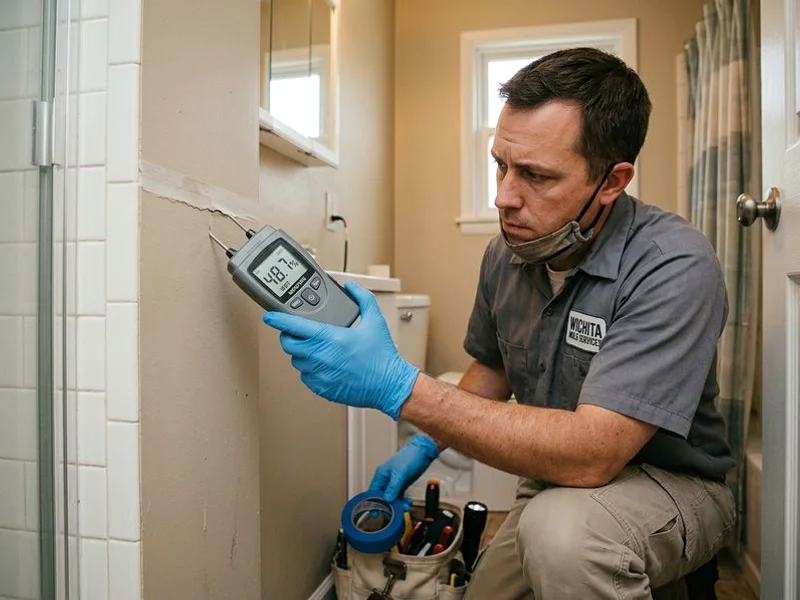
Every project begins with a thorough inspection. Our technicians use infrared cameras, moisture meters, and air quality sampling to map the full extent of mold contamination — including areas hidden behind walls and under flooring. We identify the moisture source that caused the mold and provide a detailed scope of work and cost estimate.
Step 2: Containment
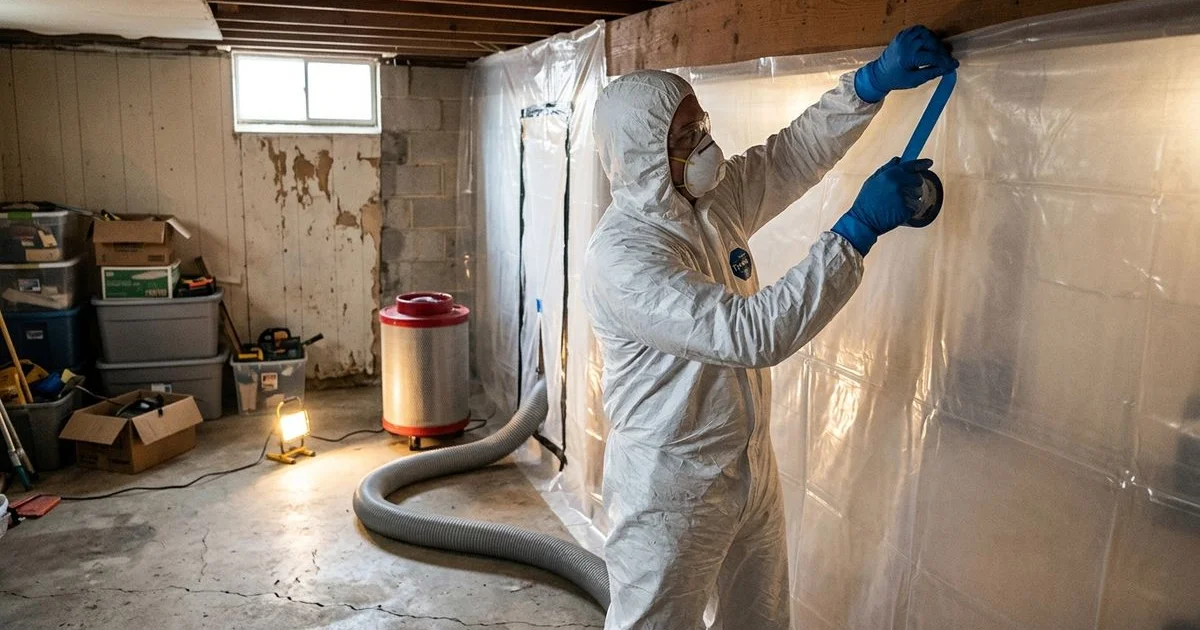
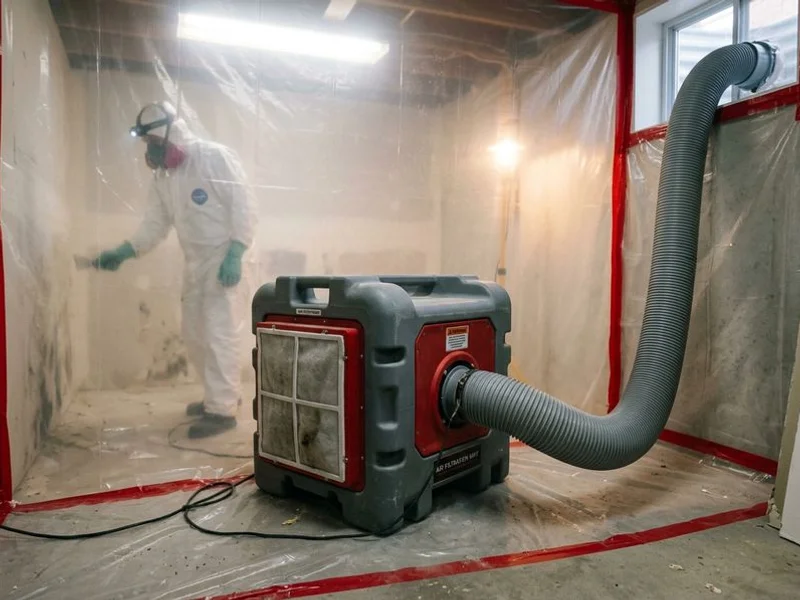
Before any removal begins, we establish full containment using polyethylene sheeting and negative air pressure machines. This prevents mold spores from spreading to unaffected areas of your home or business during the remediation process. Our HEPA-filtered air scrubbers run continuously throughout the project.
Step 3: Air Filtration
We deploy commercial-grade HEPA air filtration devices (AFDs) to capture airborne mold spores as small as 0.3 microns. These units run 24/7 during the remediation process, dramatically improving indoor air quality from day one.
Step 4: Removal and Cleaning
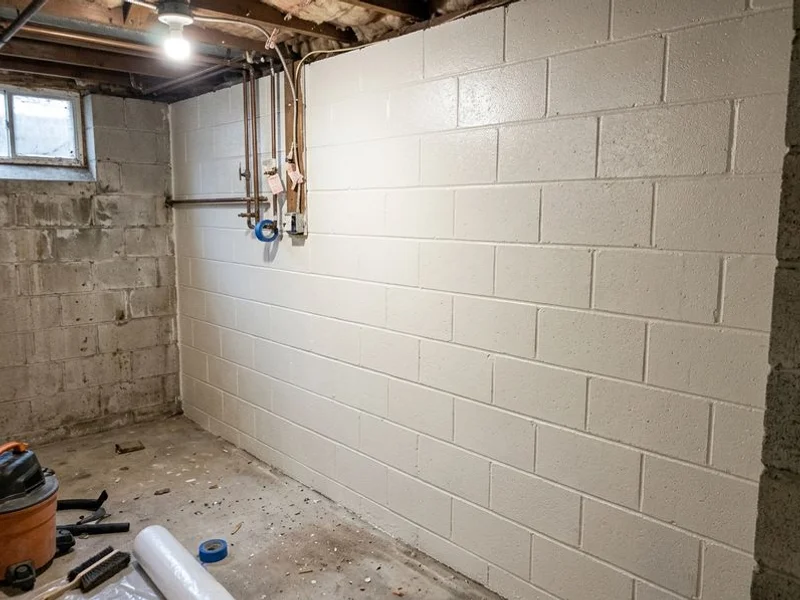
Our technicians carefully remove mold-infested materials including drywall, insulation, carpet, and other porous surfaces that cannot be effectively cleaned. Non-porous surfaces are cleaned with HEPA vacuums and treated with EPA-registered antimicrobial solutions. Every surface within the containment zone is addressed.
Step 5: Antimicrobial Treatment
After removal, we apply professional-grade antimicrobial and antifungal treatments to all affected and adjacent surfaces. This critical step eliminates residual spores and creates a protective barrier against future mold growth.
Step 6: Post-Remediation Verification
We don’t consider the job done until third-party clearance testing confirms that mold levels have returned to normal. Air quality samples are collected and analyzed by an independent lab. You receive a detailed report documenting the entire remediation process and clearance results.
Common Types of Mold We Remove
Black Mold (Stachybotrys chartarum) — The most concerning variety, often found in chronically damp areas like basements, bathrooms, and behind walls with slow leaks. Produces mycotoxins that can cause respiratory issues, headaches, and other health problems.
Aspergillus — Extremely common in homes, often found in HVAC systems, on food, and in damp building materials. Can trigger allergic reactions and respiratory infections, especially in immunocompromised individuals.
Penicillium — Commonly found on water-damaged materials including wallpaper, carpet, and insulation. Spreads rapidly and produces a strong musty odor that many homeowners describe as the first sign of a mold problem.
Cladosporium — Thrives in both warm and cool environments, making it common in Kansas homes year-round. Frequently found on fabrics, wood surfaces, and in HVAC ducts.
When to Call for Professional Mold Remediation
Not every small spot of mold requires professional remediation. The EPA recommends professional help when:
- The affected area exceeds 10 square feet
- Mold is present in HVAC systems or ductwork
- Mold resulted from contaminated water (sewage, flooding)
- Occupants are experiencing health symptoms
- Mold keeps returning after DIY cleaning attempts
- The property is being sold or purchased (pre-sale/pre-purchase inspections)
If you’re unsure, we offer free mold inspections for Wichita-area homes and businesses. Early detection is always less expensive than extensive remediation.
Insurance Coverage for Mold Remediation
Most Kansas homeowner insurance policies cover mold remediation when the mold resulted from a covered water damage event — such as a burst pipe, appliance leak, or storm damage. For a detailed breakdown, see our guide on mold remediation costs in Wichita. We coordinate directly with your insurance company, handle all documentation and photographs, and bill your insurer directly. This removes the financial stress and paperwork burden from your shoulders while ensuring you receive the coverage you’re entitled to.
Why Choose Wichita Mold Removal Services for Mold Remediation
- AMRT-certified technicians with specialized mold remediation training
- Free inspections with no-obligation detailed estimates
- Full containment protocols including negative air pressure and HEPA filtration
- Complete restoration — we remove the mold AND rebuild the affected areas
- Direct insurance coordination — we handle the paperwork and billing
- Post-remediation clearance testing by independent labs
- 20+ years of local experience in Wichita-area properties
- 24/7 emergency response — mold emergencies don’t wait for business hours